

How to Stop an HOA Foreclosure in Florida
A late HOA or condominium assessment in Florida can turn into a lien, and then into a foreclosure lawsuit. A refinance may help if the association payoff, and any first mortgage that also has to be paid, can be cleared before the case reaches a sale. I'm Travis Penny, a Senior Mortgage Broker, NMLS 1649161, with Vision Mortgage, LLC, NMLS 1286953. I started in 2004 and I'm still here. Call or text 207-615-7770.
This article explains the statutory notice rules for homeowners' associations and condominium associations, and when a loan is even worth discussing. It is not legal advice. If you have a notice or a lawsuit, speak with a Florida attorney or a HUD-approved housing counselor.
HOA liens and foreclosure under Chapter 720
Homeowners' association collection and foreclosure are governed by Florida Statutes § 720.3085 (2026).
If the governing documents allow it, the association has a lien on each parcel for any unpaid assessments. Before the association records a claim of lien, § 720.3085 requires a 45-day written notice and demand. The statute also says the association may not file a foreclosure action until 45 days after it sends a notice of intent to foreclose, and that second notice may not be sent until the first 45-day period has passed.
When the association does foreclose, the statute says the lien is foreclosed in the same manner that a mortgage of real property is foreclosed. That means a lawsuit, not a shortcut around the courts. Section 720.3085(6) also describes a qualifying offer in some cases, which can affect how the action proceeds. Those details belong in a conversation with your attorney, not in a blog post guess.
To find out the exact amount the association says you owe, Florida law provides an estoppel certificate process under Florida Statutes § 720.30851. If you are refinancing or selling, that estoppel is usually required so the closing can pay the right figure.
Condominium associations under Chapter 718
Condominium assessments are a different statute. Florida Statutes § 718.116 (2026) covers a condominium association's lien and foreclosure rights.
Under § 718.116(6)(a), the association may bring a foreclosure action in the same manner as a mortgage of real property is foreclosed. Under § 718.116(6)(b), the association may not recover a foreclosure judgment until at least 45 days after it gives the unit owner a written notice of its intention to foreclose. The same paragraph sets a fee consequence if that notice is not given at least 45 days before the action is filed and the assessments are paid before final judgment.
I keep Chapter 720 and Chapter 718 separate on purpose. An HOA in a house community and a condominium association do not use identical notice language. If your documents say "condo," use § 718.116. If they say "homeowners' association," use § 720.3085.
I am not going to invent a "super-lien cap" or a homestead exception here. If a later statute or a recorded covenant changes priority, that belongs in the title work and in legal advice, not in a summary I cannot source from the sections above.
What "stop" can mean in an association foreclosure
People search "how to stop HOA foreclosure in Florida" when they want the lawsuit and the sale to end. In practice, the paths are usually:
- Pay the amounts the association is legally owed, often using a current estoppel
- Negotiate a written payment arrangement or, in some Chapter 720 cases, use the qualifying-offer process your attorney identifies
- Defend or resolve the lawsuit in court
- Refinance or sell, and pay the association, and any other required liens, at closing
A loan may help with that last path. It does not replace the notices, the lawsuit, or an attorney. If a first mortgage is also in default, both payoffs have to work in the same closing. If they do not, I will tell you.
Association cases still use the judicial foreclosure process once the lawsuit is filed. Sale and redemption timing then follow the foreclosure judgment and Florida Statutes §§ 45.031 and 45.0315, which I cite on my Florida foreclosure bailout loans page.
What I will not tell you on this page
I will not quote a rate or an APR, and I will not name a lender. I will not promise that a loan can be finished before a sale date. Association ledgers change, first-mortgage payoffs change, and court dates move. "May help" is the honest phrase.
I also will not treat a Chapter 720 house-community file as if it were a Chapter 718 condominium file. If you email me a letter, send the letter and the recorded covenants or declaration so I can see which statute applies. If I cannot tell, I will say so and ask you to confirm with your attorney or the association manager.
A refinance does not erase a recorded claim of lien by itself. The closing has to pay the amounts required to satisfy that lien, or the title company will not insure the new mortgage. That is why the estoppel, or an official payoff letter, matters as much as the loan approval.
When I can review a refinance
I can review a Florida refinance that may help pay an association payoff, a defaulted first mortgage, or both, on an owner-occupied home or on investment property. Text or call 207-615-7770 and have, if you can:
- The 45-day demand, the notice of intent to foreclose, or the complaint
- The association estoppel or a recent ledger
- The first mortgage statement, and any default or sale notice
- The county and whether you live in the home
If the property is in Jacksonville or Duval County, also see Jacksonville Foreclosure Help. For investment and commercial bailout loans nationwide, see Foreclosure Bailout Loans.
Get counsel, then call me if a loan might help
Start with a HUD-approved housing counselor and a Florida real estate attorney if a notice or a case is already in hand. If you want me to look at a loan that may help pay what is owed, call or text 207-615-7770. I started in 2004 and I'm still here.
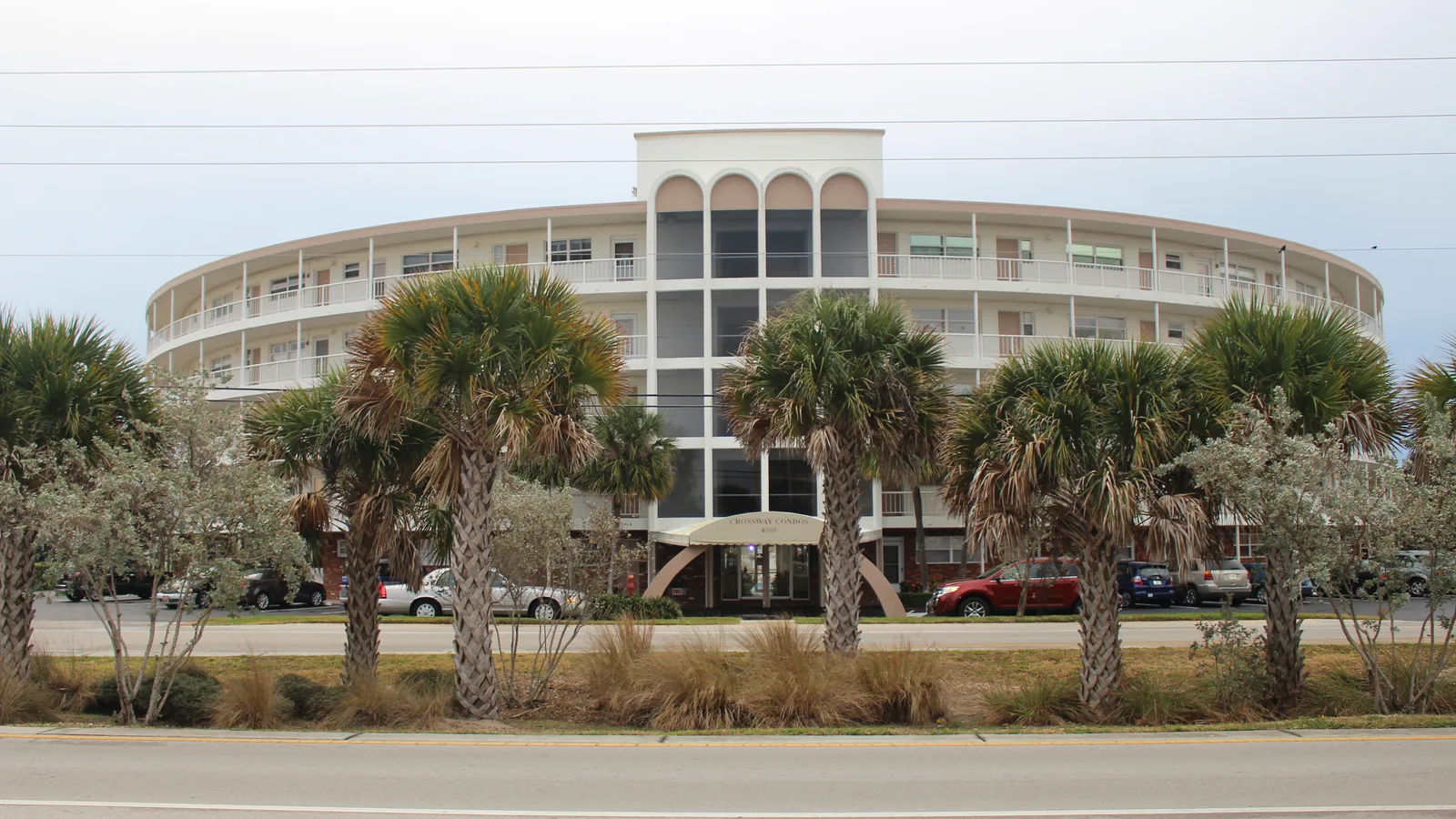
Photo: Michael Rivera, CC BY-SA 4.0, Wikimedia Commons. Crossway Condos in Cocoa Beach, Florida, shown for context. This is not a listing and not a property I have financed.
Travis Penny, Senior Mortgage Broker | NMLS 1649161 | Vision Mortgage, LLC NMLS 1286953 | Equal Housing Opportunity
FAQ
- How do I stop an HOA foreclosure in Florida?
- You typically stop it by paying what the association is legally owed, reaching a written agreement, or resolving the lawsuit in court. A refinance may help if it can pay the association, and any other required liens, at closing. Speak with a Florida attorney or a HUD-approved housing counselor. A loan is not a guarantee.
- How much notice does a Florida homeowners' association have to give before recording a lien?
- Florida Statutes § 720.3085 requires a 45-day written notice and demand before the association records a claim of lien, when that statute applies. The association also may not file a foreclosure action until 45 days after a notice of intent to foreclose, and that second notice may not be sent until the first 45-day period has passed.
- Is a condominium association foreclosure the same as an HOA foreclosure in Florida?
- No. Condominium associations use Florida Statutes § 718.116. Homeowners' associations use § 720.3085. Both can foreclose in the manner a mortgage is foreclosed, but the notice language is not identical. Use the statute that matches your community.
- What is an association estoppel certificate?
- For homeowners' associations, Florida Statutes § 720.30851 provides an estoppel certificate that states what the association says is owed. Closings use that figure, or an updated official payoff, so the lien can be paid correctly.
- Can I refinance to pay a Florida HOA or condo foreclosure?
- A refinance may help if there is enough equity, a usable estoppel or payoff, and enough time before any sale. I can review owner-occupied Florida homes and investment property. Call or text 207-615-7770. I do not guarantee a close.
- Does paying the association automatically end a first-mortgage foreclosure too?
- No. An association case and a mortgage case are separate. If both are pending, both payoffs have to be resolved. I will not treat them as one debt.