
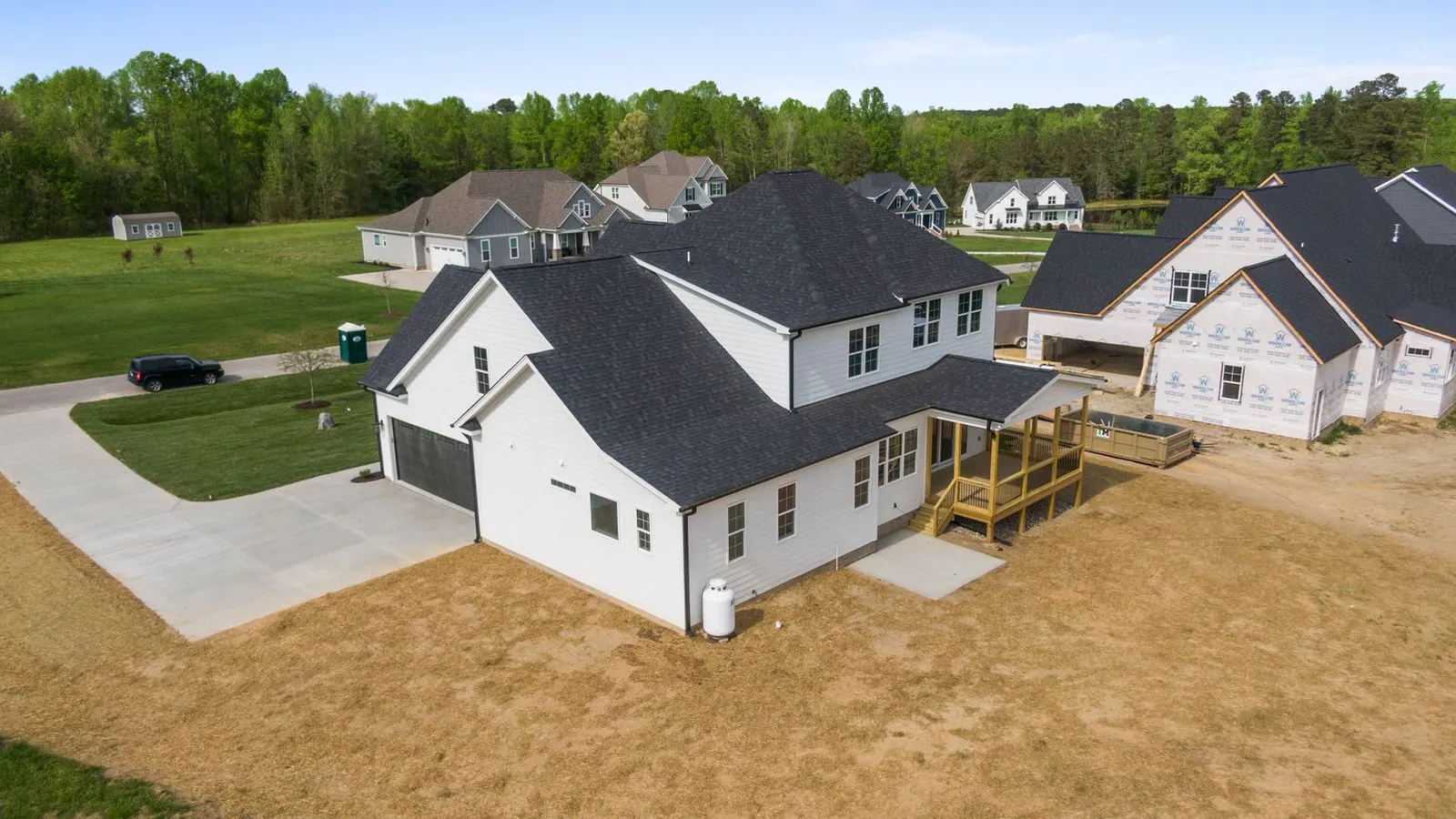
USDA construction loan in Maine and Florida with one time close
A USDA construction loan with one closing in Maine and Florida. Build a primary home in an eligible rural area and roll into a permanent USDA loan.
Last reviewed October 13, 2026
Who does one time close construction loans in Maine and Florida?
I do. I'm Travis Penny, an independent mortgage broker with Vision Mortgage, and I arrange USDA one time close construction loans for primary homes in Maine and Florida. One application, one closing, then the loan converts to a regular mortgage when the home is finished. I compare available programs against your eligibility, the land and the builder before recommending a path. Call or text 207-615-7770.
Yes, I do USDA one time close construction loans in Maine and in Florida. One loan covers the build and your long term mortgage, and you close one time.
USDA doesn't require a down payment for eligible buyers, as a program rule. That comes with two gates, though: household income limits that are set by area, and eligibility rules about where the property sits. If your land and your household clear both, USDA can be a strong way to build. If they don't, I also do FHA, VA, and conventional one time close, so I find the one that fits.
This page is general education. It is not an offer to lend, and it isn't a promise that you'll qualify. Your build gets its own review.
All loans are subject to credit and underwriting approval. Not all applicants will qualify. Program terms and availability can change. This page is for general education and is not a loan offer or a commitment to make a loan. Travis Penny, NMLS ID #1649161, is a mortgage broker with Vision Mortgage, LLC, NMLS #1286953. Equal Housing Opportunity.
Related construction reading
I explain who qualifies for a Maine one time close build and what goes into construction loan costs.
For Maine lots, read my USDA construction guide for land, septic, wells and seasonal work.
Building on land you already own
Land you already own can count toward the down payment, and a one time close loan can pay off what you still owe on it. There is no set acreage limit on my end, larger parcels are reviewed case by case, and the review changes once a parcel is over 25 acres. Rural Maine lots often have no public water or sewer, so a well and septic system need attention before the loan closes. Site work, septic design, the driveway, power and water belong in the construction budget from day one. Confirm legal access, zoning and utilities before buying rural land.
I cover USDA one time close construction in Maine, who qualifies for a Maine one time close, and what a one time close construction loan costs in separate guides. If you want the program view, see the conventional one time close construction loan, a construction loan in Maine, or Florida one time close construction. Later, you may wonder whether you can refinance a USDA loan. I also explain what USDA loan reviews tell you and how hybrid appraisals in Maine and Florida work.
What is a USDA one time close construction loan?
Most people picture building a house with a short construction loan, then a new mortgage when the house is done, which means two approvals and two closings. A one time close combines them into one loan with one closing up front.
USDA is one of four ways I do it. The other three are FHA, VA, and conventional. All four are available in Maine and in Florida.
What you can build with it: stick built homes, modular homes, and the land. There's no acreage limit on my end. Bigger parcels get reviewed case by case, and once a parcel gets over 25 acres the review changes, because no two pieces of land are the same.
Who qualifies for USDA construction
Here's the honest list.
- Household income. Your household income has to fit the USDA limit for the area where you're building. The limits are set by area, so what works in one county may not work in the next one over.
- Property location. The property has to be in a USDA eligible area. This one is about the land, not about you. I check the exact address before you commit to plans.
- Program rules. You need to meet the credit and documentation rules of the USDA program itself.
- A qualified builder. You can't act as your own builder on this loan. That goes for every one time close program I do, not just USDA.
Already own your land? That helps. Land you already own can count toward the down payment. USDA doesn't require a down payment for eligible buyers, so this matters most when I compare USDA side by side with FHA or conventional for your build.
What paperwork you'll need
Whatever the loan program requires. On USDA, that means the program's own rules for income, assets, and credit, plus the household income check against the limit for your area. If I recommend FHA, VA, or conventional instead, you follow that program's list.
I'll tell you exactly what to send once I know which program fits. No sense gathering a stack of paper for the wrong one.
How the process goes, step by step
- Call or text me. I ask about where you want to build, what you want to build, and who's in the household. That tells me pretty quickly whether USDA is on the table.
- I check the land. Is the property in a USDA eligible area? If it isn't, I look at FHA, VA, or conventional one time close instead.
- I check the income. Your household income gets compared to the USDA limit for that area.
- I review the builder. I work with multiple builders in each state. If you don't have one yet, I can connect you. If you do, I check them against the builder requirements further down this page.
- I review the budget. Every one time close I do has a 5% contingency reserve built in, so there's room for the surprises that show up on every job site.
- You send the program documents. Underwriting reviews the file, the builder, and the project.
- You close once. That single closing covers construction and your permanent mortgage.
- Your builder builds. When the house is done, you're already in your long term loan. No second closing.
USDA vs FHA vs VA vs conventional one time close
All four do the same basic job: one loan, one closing, from dirt to finished home. The difference is who each one fits.
USDA. No down payment required for eligible buyers. The tradeoff is the two gates: household income limits by area and property eligible area rules. A good fit if your land is in an eligible area and your household income fits the limit.
FHA. 3.5% down payment minimum. For construction, FHA typically needs a 660 or better credit score. There's no USDA style location gate or area income limit. Often the next look when the land isn't USDA eligible or the household is over the income limit. Details are on my FHA one time close construction loan page.
VA. No down payment required for people with VA eligibility. If you have VA eligibility, it belongs in the conversation. Details are on my VA one time close construction loan page.
Conventional. Not a government program, so none of the USDA location or income rules apply. Down payment and credit depend on your file. It fits clients who don't fit the government programs or would rather not use one.
A few things stay the same across all four. You can't be your own builder. The builder has to meet my requirements. The 5% contingency reserve is built in. Land you already own can count toward the down payment.
Builder requirements
The builder matters as much as you do on these loans. Here's what I need to see:
- At least a 3 year history building
- 10 or more projects, with at least 5 of them completed
- A Dun & Bradstreet score or acceptable credit
- Proper references
And one more time, because it catches people: you can't act as your own builder. I get it if you have construction experience. It's still a firm rule on these loans.
If the builder you like doesn't check every box yet, it's better to find out before you sign anything.
USDA construction in Maine
Building in Maine on family land, or on a bigger parcel out past town? Both can work. There's no acreage limit on my end, and larger parcels get looked at case by case, with the review changing once you're over 25 acres. If the land is already yours, it can count toward the down payment.
The first two questions in Maine are always the same. Is the property in a USDA eligible area? Does your household income fit the limit for that area? I check both before I discuss floor plans. I work with multiple builders around the state, stick built and modular. If you're leaning modular, my modular home financing page has more on that side of it.
USDA construction in Florida
The USDA rules don't change when you cross into Florida. Income limits are still set by area, and the property still has to be in an eligible area. I don't eyeball a map and guess. I check the exact address.
I work with multiple builders in Florida too, so you're not stuck with whoever answers the phone first. Stick built, modular, and land are all on the table, with no acreage limit and a case by case review on larger parcels, and a closer look once you're over 25 acres. And if USDA doesn't fit the property, FHA, VA, and conventional one time close are right there as backups.
Frequently asked questions
Do you do USDA one time close construction loans in both Maine and Florida?
Yes. I do USDA, FHA, VA, and conventional one time close construction in both states.
Does USDA construction really require no down payment?
As a program rule, yes. USDA doesn't require a down payment for eligible buyers. Your household income still has to fit the limit for your area, and the property has to be in a USDA eligible area.
Can I be my own builder?
No. Clients can't act as their own builder on USDA or on any other one time close program I do.
Can I build a modular home with a USDA construction loan?
Yes. I cover stick built homes, modular homes, and land. The builder still has to meet my builder requirements.
Is there an acreage limit?
Not on my end. Larger parcels are reviewed case by case, and once a parcel gets over 25 acres the review changes.
I already own my land. Does that help?
It can. Land you already own can count toward the down payment.
What if my income is over the USDA limit, or the land isn't in an eligible area?
Then I look at the other one time close programs. FHA has a 3.5% down payment minimum and typically needs a 660 or better credit score for construction. VA works for people with VA eligibility. Conventional is the other route.
What documents will I need?
Whatever the loan program you end up using requires. I'll give you the exact list once I know the program.
I'm building on a rural Maine lot. What goes in the budget?
A well, septic design, power, the driveway and site work belong in the construction budget from day one, not as a surprise after closing. Rural lots often have no public water or sewer, so confirm legal access, zoning and utilities before buying the land.
How do construction draws work?
Construction funds are paid to the builder in stages called draws as work is done and documented under the lender's process. Under USDA rules, the lender needs your written approval before each draw. The exact draw process is lender specific.
How does a USDA construction loan work?
A USDA construction loan with one time close covers the build and the permanent USDA mortgage in one closing, for a primary home in an eligible rural area of Maine or Florida.
Keep exploring
Let's look at your build
Thinking about building? Call or text me at (207) 615-7770, or email travis@travis.mortgage. Tell me where the land is, what you want to build, and who's in the household, and I'll do a scenario review of your own build. I started in 2004 and I'm still here.
This page is general education only. It is not an offer to lend or a commitment to make a loan. All loans are subject to credit, underwriting, property, and program approval. Not all applicants will qualify. Program guidelines can change.
Travis Penny, Mortgage Broker, NMLS 1649161, licensed in Maine and Florida. Vision Mortgage LLC, NMLS 1286953, licensed in Maine, New Hampshire and Florida. 352 Warren Avenue, Suite 6, Portland, ME 04103. (207) 615-7770. Equal Housing Opportunity.
Not sure which loan fits?
Answer seven quick questions and I'll point you to the right program.
Let’s look at your plans together.
I'll lay out your options in plain English. No pressure, no scripts.
Average of my loans from submission to clear to close. Not a guarantee; individual timelines vary. Clear to close means underwriting is done. Closing is scheduled after that.