
DSCR loans in Illinois
Illinois DSCR Loans: Requirements, Chicago Two-Flats, and Cook County Taxes
DSCR loans are for investment and rental properties only. Primary and second homes are available in Maine and Florida. I am not licensed for a primary or second home in Illinois.
Travis Penny, Mortgage Broker, NMLS #1649161, Vision Mortgage, LLC NMLS #1286953. NMLS Consumer Access
Last reviewed October 8, 2026
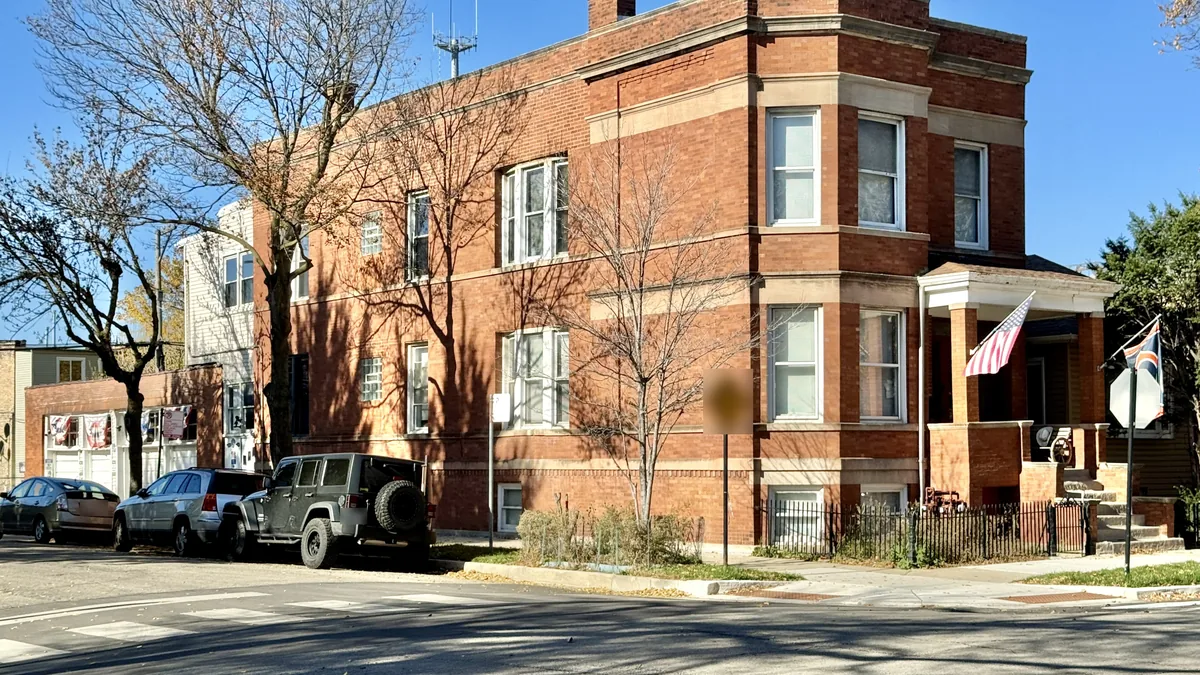
Photo: Warren LeMay, CC BY-SA 4.0, via Wikimedia Commons. Cropped, a street sign and license plates blurred.
.jpg)
I'm Travis Penny, and I started in 2004 and I'm still here. Before you make an offer on an Illinois rental, run the rent and the full payment through my DSCR calculator. Then text me at (207) 615-7770 or send the address through my contact page, and I'll tell you which programs fit.
For everything lenders check on a DSCR file, see my DSCR loan requirements guide. The program itself is on my DSCR loans overview, and if you plan to buy in a company, read how DSCR loans work in an LLC.
Yes. Illinois is one of the 37 states where I arrange DSCR loans on investment and rental properties, and my licensing table shows **No** for LLC vesting in Illinois, so title can go in your personal name or in an LLC. Most Illinois questions I get start in Chicago: two-flats, three-flats, small apartment buildings, and a Cook County tax bill that needs its own homework before you trust the numbers.
A DSCR loan qualifies on the building instead of your tax returns. I take the documented rent and divide it by the full monthly payment on that property, meaning principal, interest, property taxes, insurance, and any association dues. The result is the debt service coverage ratio, and it is the first thing a program looks at. You can test an Illinois deal on my DSCR calculator before you make an offer.
How the program works in general is on my DSCR investor loan page. This page sticks to Illinois: what a file needs, how you can hold title, what changes inside Chicago and suburban Cook County, and how I shop the loan.
All loans are subject to credit and underwriting approval. Not all applicants will qualify. Program terms and availability can change. This page is for general education and is not a loan offer or a commitment to make a loan. Travis Penny, NMLS ID #1649161, is a mortgage broker with Vision Mortgage, LLC, NMLS #1286953. Equal Housing Opportunity.
12.4 business day average to clear to close
My average from loan submission to clear to close is 12.4 business days. That's an average, not a promise. Your timeline depends on your file, the appraisal and title, but when you need speed, I can move fast.
Average of my loans submitted to UWM, from submission to clear to close. Not a guarantee; individual timelines vary. Clear to close means underwriting is done. Closing is scheduled after that.
Text me at (207) 615-7770
What are the DSCR loan requirements in Illinois?
These are the pieces every Illinois DSCR file has to clear. Each program sets its own thresholds, so I match your property to the program instead of the other way around.
- The right kind of property. A residential investment or rental property with 1 to 9 units that you and your family will not live in. Mobile and manufactured homes are not eligible.
- Documented rent. A signed lease, or the appraiser's market rent schedule. On a two-flat or three-flat I look at each unit's rent separately. On a 5 to 9 unit building I look at the full rent roll and the leases behind it.
- Rent that carries the payment. The rent is compared with the complete payment, including the real Cook County or downstate tax figure and a landlord insurance quote, not an owner occupied estimate.
- Credit, reserves, and cash to close. Reviewed program by program. I tell you where you land once I see the property and your file, not before.
- Appraisal and title. A full appraisal with a rent schedule, plus clear title.
- Vesting. Your personal name or an LLC. If you use an LLC, the name on the deed has to match the borrower on the loan.
What you do not need is a stack of tax returns, W2s, or pay stubs as the basis of approval. This is general education, not a loan offer or a commitment to lend.
Can you close an Illinois DSCR loan in your own name?
Yes. On my Licensing page, Illinois shows No under LLC vesting required, so you can close in your personal name or in an LLC. A specific program can still prefer one or the other, and I confirm that on your file before you commit to a structure.
If you want an entity, an Illinois LLC is formed through the Illinois Secretary of State, and the LLC has to be in place before closing so the deed and the loan line up. Some Chicago owners hold title through an Illinois land trust instead. Whether a DSCR program will lend with that vesting is decided program by program, so tell me at the start if your building is held that way.
Already own an Illinois rental in your own name and want to move it into an LLC? That usually means a new deed recorded with the county. Illinois purchases commonly involve an attorney, and that is the right person to ask before you deed a building that has tenants in it.
DSCR loans in Chicago: two-flats, three-flats, and small buildings
The brick two-flat and three-flat, with one apartment on each floor, is the classic Chicago rental, and it is exactly the kind of building a DSCR loan is built for. I see the same questions on courtyard buildings and other small apartment buildings with 5 to 9 units, which DSCR also covers. Above 9 units, the deal moves to commercial financing.
City versus suburbs. Inside Chicago, most rentals fall under the Chicago Residential Landlord and Tenant Ordinance. The main exemption is for owner occupied buildings with six or fewer units, and a DSCR building is not owner occupied by definition, so plan your leases and security deposit handling around that ordinance. In suburban Cook County, the Cook County Residential Tenant and Landlord Ordinance has applied since 2021, with a similar owner occupied exemption, and a few suburbs such as Evanston and Mount Prospect keep their own rules. In DuPage, Lake, Will, Kane, and McHenry counties, check the city or village where the property sits.
Short-term rentals in Chicago. Count on long-term rent. Under the City of Chicago's shared housing rules, a short-term rental in a single family home or in a building with 2 to 4 units has to be the host's primary residence, with one active rental at most. An investor-owned two-flat does not meet that test. Buildings with 5 or more units can have a limited number of short-term units without the primary residence rule, but registration, Restricted Residential Zones, and the Prohibited Buildings List still apply, so I underwrite a Chicago file on long-term rent unless the short-term use is clearly allowed.
Who is a DSCR lender in Chicago?
If you searched for a DSCR lender in Chicago or the best DSCR lenders in Illinois, here is the straight answer: I am a mortgage broker, not a lender. I don't fund the loan myself. I take one application and shop it with wholesale lenders that make DSCR loans on Illinois rentals, then show you which program fits your building, your vesting, and your rent.
I don't name lenders on this page, because the best fit changes with the property and with each lender's current guidelines. On a Chicago file, these are the questions that separate one program from another:
- Does it handle 2 to 4 unit buildings and 5 to 9 unit buildings, or only single family?
- How does it read a rent roll with month to month tenants or one vacant unit?
- Will it accept your vesting, whether that is your own name, an LLC, or a land trust?
- How does it treat an older building's condition on the appraisal?
- What reserves does it want once you own several rentals?
One application with me covers that comparison, instead of you repeating it bank by bank.
Cook County property taxes and your coverage ratio
In Cook County, taxes are often the line that decides whether the rent covers the payment, so I budget them carefully. The Cook County Assessor reassesses one third of the county each year on a three year cycle that rotates among the City of Chicago, the north suburbs, and the south and west suburbs. A building bought just before its area's reassessment year can see a different bill afterward.
The seller's bill can also be misleading. The Cook County Homeowner Exemption is only for owners who live in the property as their principal residence. As an investor you will not carry it, so your bill after the purchase can be higher than what the seller paid. Cook County bills also come in two installments, and the second installment is where the current year's changes show up.
I don't use a rule of thumb for any of this. I ask for the parcel's current tax record and build the payment from a realistic number for an investor owner. If you are not sure what that number should be, your Illinois attorney or the Assessor's Office can help you pin it down. Outside Cook County, each county sets its own process, and I take the same parcel by parcel approach.
What I need to review an Illinois rental
Most of this is already in your deal folder:
- The address, the county, and the number of units
- Current leases, or the rent you expect for each unit
- The parcel's current property tax record
- A landlord insurance quote for the whole building
- Your vesting plan: personal name, an Illinois LLC, or a land trust
- Confirmation that you and your family will not live in any unit
With those, I can run the coverage ratio on real figures and tell you which programs are worth your time.
Where Illinois fits on my licensing page
Residential home loans in Maine and Florida. DSCR loans on investment and rental properties in 37 states. Illinois is on that DSCR list, with No under LLC vesting required. The list covers business purpose loans on non owner occupied residential property with 1 to 9 units.
Business purpose has a specific meaning. Federal Truth in Lending commentary treats credit to buy or improve a rental you won't occupy as business purpose, and if you expect to stay in the property more than 14 days in the coming year, it no longer counts as non owner occupied under that rule. DSCR loans are for investment and rental properties only. Primary and second homes are available in Maine and Florida, so a home you plan to live in, in Chicago or anywhere else in Illinois, is not a loan I can do there.
FAQ
What are the requirements for a DSCR loan in Illinois?
An Illinois DSCR loan needs a residential investment or rental property with 1 to 9 units that you will not live in, rent documented by a lease or the appraiser's market rent, rent that covers the full payment including taxes and insurance, acceptable credit and reserves for the program, and a vesting plan in your personal name or an LLC. Thresholds vary by program, and I check your file against several before telling you what fits.
Do I need an LLC for a DSCR loan in Illinois?
No. My licensing table shows No for LLC vesting in Illinois, so you can close in your personal name or in an LLC. If you choose an LLC, form it with the Illinois Secretary of State before closing and make sure the deed and the loan carry the same name. If the property is in an Illinois land trust, tell me up front, because acceptance varies by program.
Who is the best DSCR lender in Chicago or Illinois?
There isn't one lender that fits every Chicago building. I am a mortgage broker, so I shop your file with wholesale lenders that make DSCR loans on Illinois rentals and show you which one fits your property type, rent roll, and vesting. Text me at (207) 615-7770 with the address and the rents, and I'll tell you where it lands.
Can I use a DSCR loan on a Chicago short-term rental?
Usually not on a single family home or a 2 to 4 unit building. Chicago's shared housing rules require a short-term rental in those buildings to be the host's primary residence, and a DSCR property is not your residence. Buildings with 5 or more units have a separate, limited allowance. For most Chicago investors, the file is built on long-term rent.
Can I buy an Illinois rental if I live in another state?
Yes. A DSCR loan qualifies on the property's rent, not on where you live. Run the numbers on my DSCR calculator, then text me at (207) 615-7770 with the city and the rent.
Is an Illinois DSCR loan for a primary home or second home?
No. The DSCR loans I arrange in Illinois are business purpose loans on investment and rental properties only. Primary and second homes are available in Maine and Florida. If you plan to live in the Illinois property for any part of the year, it is not a DSCR file I can do there.
Sources
- Chicago Municipal Code 5-12-020 (Residential Landlord and Tenant Ordinance exclusions)
- Cook County Code Chapter 42, Article IV, Residential Tenant and Landlord Ordinance (effective June 1, 2021)
- City of Chicago BACP, Shared Housing Registration common eligibility criteria
- Cook County Assessor's Office, triennial reassessment cycle and Homeowner Exemption
- CFPB Regulation Z Official Interpretation, comment 3(a)-4 (non owner occupied rental credit)
- travis.mortgage/licensing (DSCR state list and LLC vesting table)
Looking at a Chicago two-flat or an Illinois rental anywhere in the state? Run the rent on my DSCR calculator, then text me at (207) 615-7770 with the address, or send it through my contact page. I'll tell you how the coverage looks and which programs fit.
Keep exploring
Other states I cover
I do DSCR loans on investment and rental properties in 37 states. See the full list on the DSCR loans overview.
- DSCR loans in Alabama
- DSCR loans in Arkansas
- DSCR loans in Colorado
- DSCR loans in Connecticut
- DSCR loans in Florida
- DSCR loans in Georgia
- DSCR loans in Indiana
- DSCR loans in Louisiana
- DSCR loans in Maine
- DSCR loans in Michigan
- DSCR loans in North Carolina
- DSCR loans in Ohio
- DSCR loans in Pennsylvania
- DSCR loans in South Carolina
- DSCR loans in Tennessee
- DSCR loans in Texas
- DSCR loans in Wisconsin
Want a real human to walk you through this?
I'll lay out your options in plain English. No pressure, no scripts.