
Financing a Maine Camp or Lake House: What I Look At First
By Travis Penny, mortgage broker ·
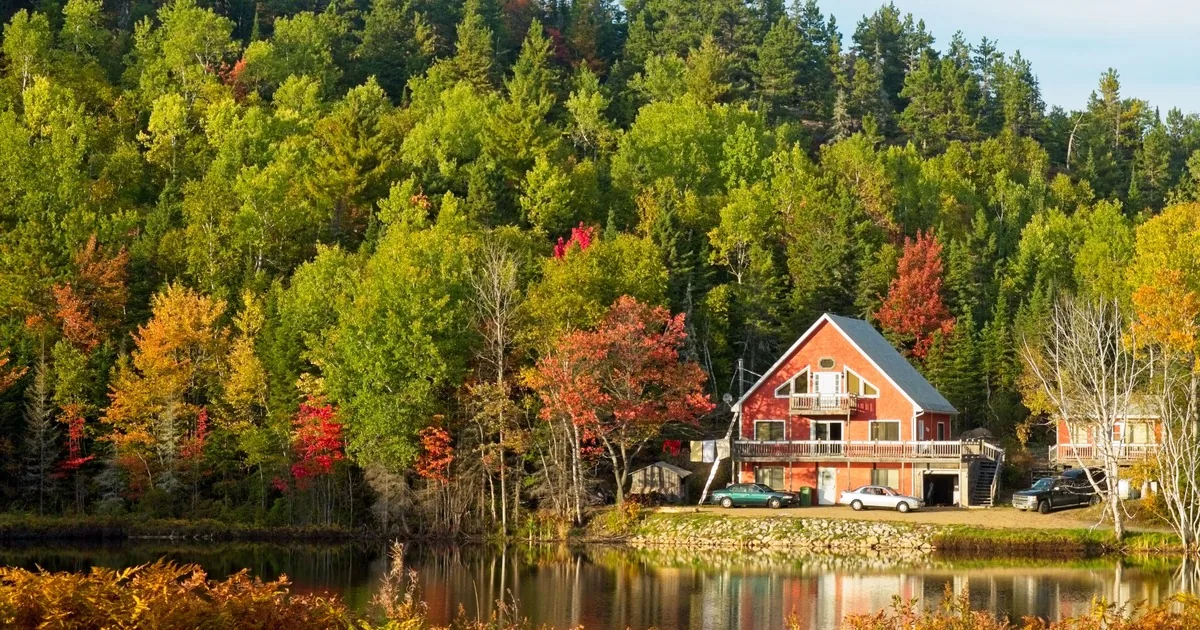
It's a camp on Kezar Lake in Lovell, with a screened porch facing the water and a dock pulled up neat for the season. The listing says year-round, and a buyer from Scarborough is already picturing Thanksgiving there.
That's a good time to call me, before the offer goes in. I arrange Maine home loans as a mortgage broker, and a camp file usually turns on the property more than on the buyer's paperwork.
Which camp and lake house files usually finance smoothly?
The files that usually finance smoothly start with year-round road access. That means a town road that gets plowed, or a private road with a recorded maintenance agreement.
Water and waste come next. A working well and septic, ideally inspected recently, take a lot of questions off the table. So do nearby sales that support the value without the appraiser making heavy rural adjustments.
Which files are harder but often still doable?
Harder doesn't mean no. Seasonal-only access is one harder case, and a private road with no maintenance agreement is another.
A septic that has failed or hasn't been checked belongs here too, along with a camp that has very few comparable sales. Each of these usually means more paperwork or a different loan. I'd rather find it before the offer than after the appraisal.
What does a lender look for on a private or camp road?
Fannie Mae's guide wants a property to front on a public street that's maintained. On a privately maintained road, it asks for a recorded, legally enforceable agreement that says who pays for repairs and each owner's share. It should also cover what happens if someone doesn't pay, and in most cases it should run forever and bind future owners.
Fannie Mae doesn't require a separate agreement when state law spells out each owner's upkeep duties. Maine passed a law in 2021 that, when nothing else is in writing, has each residential owner share equally in reasonable repairs and upkeep of a private road that serves as the main access. I still ask early for any road agreement or road association papers.
FHA and VA each have their own road rules. FHA wants a private road protected by a permanent recorded easement, and it doesn't require a maintenance agreement. VA wants an all-weather surface, a permanent easement and an HOA or joint maintenance agreement, unless state law covers the upkeep.
What happens with the well, septic and shoreland rules?
A conventional loan accepts a private well and septic, and they need to sit on the property unless there's a legally binding agreement to use and maintain them off-site. Maine CDC recommends testing well water when you buy a home, and testing every year for bacteria and nitrates. It suggests testing every 3 to 5 years for arsenic, uranium, radon and more.
Camps that pull water straight from the lake are a special case. FHA won't insure a property whose water comes from a lake, spring or river. VA asks for an appraiser comment and the veteran's written acknowledgment.
Then there's shoreland zoning. Maine's shoreland zone covers land within 250 feet of a great pond or river, and towns write and enforce their own rules for it. If a camp sits closer to the water than today's rules allow, it can still finance as a legal nonconforming use when the appraisal reflects any effect on value. I want to know whether it could be rebuilt if it burned, and so does the appraiser.
How does an appraiser find comps for a camp?
Fannie Mae requires at least three closed comparable sales, and sales from the last 12 months should be used. In a rural area with few sales, the appraiser can use older ones or ones a good distance away, as long as the report explains why.
Waterfront camps make this harder, because a frontage lot and a back lot aren't the same property. Before an offer, I look at what has sold on the same lake or nearby lakes, so the appraisal doesn't surprise anyone.
Is the camp seasonal or year-round?
A second home has to be suitable for year-round occupancy under Fannie Mae's rules. FHA asks for heating adequate for healthful and comfortable living. VA wants permanently installed heat that keeps areas with plumbing at 50 degrees or warmer.
So I look at the heat source and the foundation. I also ask whether the water lines work in January or get drained every fall.
Will it be a second home, a primary home or an investment?
How you'll use the camp decides the loan. Fannie Mae's second home rules say you live there part of the year and keep control of it, and it's limited to one unit. It can't be rental property, a timeshare or under a manager's control, and rental income can't count toward qualifying.
If the plan is to rent it most weeks, it's an investment property, and my page on short term rental loans covers that route. Fannie Mae's general minimum for a one-unit investment purchase is 15% down.
If the camp will be your primary home, more doors open. FHA asks for at least 3.5% down, and at least one borrower moves in within 60 days. See my Maine FHA page and Maine VA page, since VA asks you to certify you'll live there. USDA also requires a principal residence and caps household income.
As a mortgage broker, I compare these programs across lenders and check which ones your camp and your file meet. Residential home loans in Maine and Florida. DSCR loans in 37 states.
FAQ
Can you get a mortgage on a seasonal camp in Maine?
A second home loan needs a camp that's suitable for year-round occupancy under Fannie Mae's rules. A camp with seasonal-only access or no winter heat is harder to finance, and I look at the road and the heat before an offer.
Do you need a road maintenance agreement to buy a camp on a private road?
Fannie Mae asks for a recorded maintenance agreement on a private road unless state law spells out owners' upkeep duties. Maine's 2021 law shares upkeep equally when nothing else is in writing. FHA needs a permanent recorded easement and doesn't require an agreement.
Can you use an FHA loan on a lake house?
Yes, if the lake house will be your primary home and it meets FHA's property rules. FHA won't insure a property whose water supply comes straight from a lake, spring or river, and you need to move in within 60 days.
How much do you need to put down on a camp as a second home?
Fannie Mae's general minimum for a one-unit second home purchase is 10% down, a 90% loan-to-value. Some programs set it higher, and the camp still has to meet the second home rules.
Should you test the well before buying a Maine camp?
Yes. Maine CDC recommends testing well water when you buy a home, then every year for bacteria and nitrates and every 3 to 5 years for arsenic, uranium and radon. FHA and VA can also require a test by a third party.
Can you rent out a camp you financed as a second home?
Fannie Mae's rules say a second home can't be rental property or under a manager's control, and rental income can't count toward qualifying. If you'd rent it most weeks, an investment property loan is the better fit.
Picture that Kezar Lake camp next Thanksgiving, the porch swept and smoke coming from the chimney. If you have a camp or lake house in mind, or you're an agent with a buyer who does, send me the scenario through my contact page or at travis@travis.mortgage. I'll tell you straight what I see in it.
Started in 2004 and I'm still here.
Sources
- Fannie Mae Selling Guide: B2-1.1-01, Occupancy Types, B4-1.3-04, Site Section of the Appraisal Report, B4-1.3-08, Comparable Sales and the Eligibility Matrix (Aug. 5, 2026)
- HUD Handbook 4000.1, FHA Single Family Housing Policy Handbook (Aug. 12, 2026)
- VA Pamphlet 26-7, Lenders Handbook, Chapter 12, Minimum Property Requirements (KnowVA)
- 38 U.S.C. 3704(c), VA occupancy requirement
- 7 CFR 3555.151, USDA eligibility requirements (eCFR)
- Maine DEP, Mandatory Shoreland Zoning
- Maine CDC, Private Well Water
- 23 M.R.S. 3121, Responsibility for cost of repairs to and maintenance of private roads